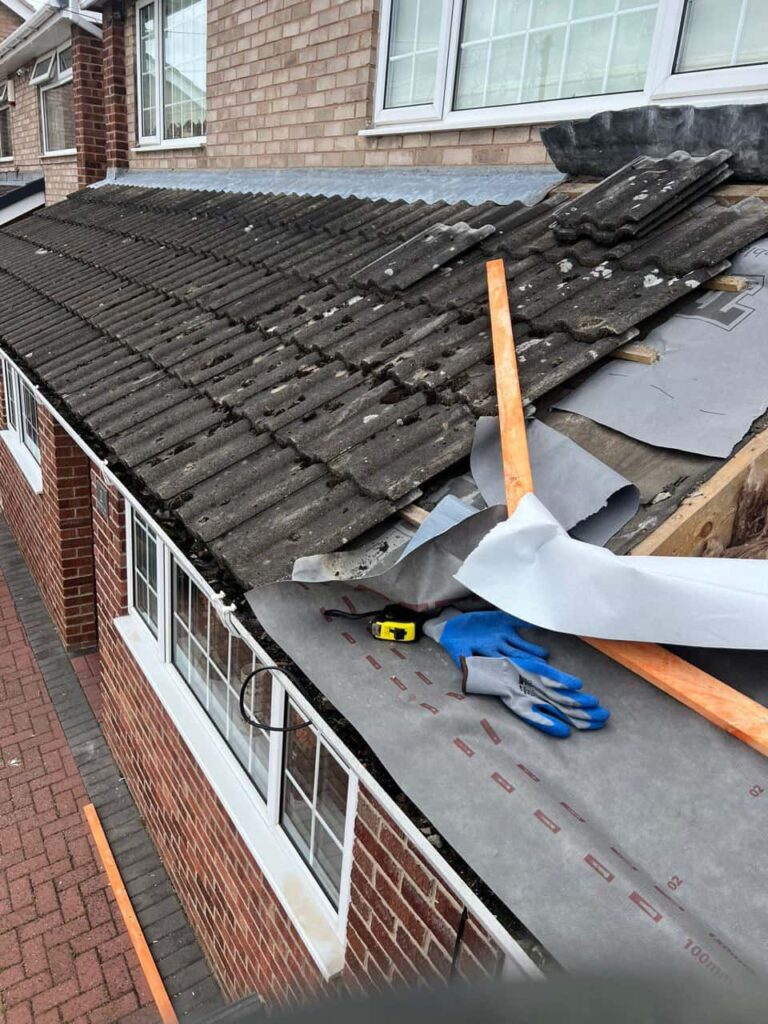
Every roof experiences gradual wear. Roofing materials are continually exposed to rain, wind, temperature changes and seasonal weather, so some signs of ageing are expected over time. A roof that no longer looks new is therefore not necessarily a roof that is failing.
The situation becomes more important when ordinary weathering begins to affect how securely and effectively the roof performs. For property owners in Smethwick, West Midlands, understanding the difference between cosmetic ageing and developing deterioration can help ensure that roofing problems are assessed before they spread into surrounding areas.
How Can You Tell When Normal Roof Wear Is Becoming a Problem?
General roof wear becomes a concern when deterioration starts affecting the roof’s ability to remain secure and weather-resistant. Rather than focusing on one minor imperfection, it is useful to look for changes in the number, severity and distribution of defects.
Warning signs can include:
- Increasing numbers of cracked or damaged tiles
- Tiles beginning to slip or move
- Recurring water ingress
- Deteriorating ridge or verge details
- Loose or damaged flashing
- Several vulnerable areas developing at the same time
- Problems returning after previous repairs
- Visible deterioration becoming progressively more widespread
The presence of one defect does not automatically indicate serious roof failure. The overall pattern is much more informative.
Cosmetic Ageing Is Different From Functional Deterioration
Roofing materials naturally change in appearance as they age.
Discolouration, weathering and a generally older appearance do not necessarily prevent a roof from performing correctly. If the covering remains secure, important junctions are sound and there are no signs of water ingress, the roof may continue to provide dependable protection.
Functional deterioration is different.
When tiles begin cracking, fixings lose their effectiveness or important weather-resistant details start failing, the condition has progressed beyond appearance alone.
An Increasing Number of Damaged Tiles Deserves Attention
One cracked tile within an otherwise sound roof can often be treated as a localised defect.
If damaged tiles begin appearing across several sections, however, the pattern can indicate that roofing materials are deteriorating more generally.
This does not automatically mean the complete roof requires replacement. It does mean that inspecting individual defects in isolation may no longer provide a complete picture.
A broader assessment can establish how much of the roof remains serviceable and whether deterioration is concentrated or widespread.
Slipping Tiles Suggest That Something Has Changed
Roof tiles that have remained secure for many years should not normally begin moving without a reason.
A slipped tile may have become damaged, its fixing may have deteriorated, or surrounding materials may have changed sufficiently to affect its stability.
Where one isolated tile has moved, localised repair may be appropriate.
Where several tiles are slipping or movement continues to appear in new areas, the condition deserves closer investigation because it may indicate a wider decline in the security of the roof covering.
Repeated Water Ingress Is a Clear Warning Sign
A roof that looks weathered externally but remains dry internally presents a different situation from one that has started leaking.
Water ingress indicates that the roof’s protective arrangement has been compromised somewhere. The source might be relatively contained, such as one displaced tile or a local flashing defect.
Repeated leaks or moisture appearing in different areas are more concerning.
They can indicate that several parts of the roofing system have become vulnerable and that the extent of deterioration needs to be established.
Small Leaks Should Not Be Judged by the Size of the Stain
A small ceiling mark does not necessarily mean the external defect is equally small.
Water can travel beneath roofing materials before becoming visible inside a property. The damp area seen indoors may therefore be some distance from the actual point of entry.
An internal stain that grows, returns after rainfall or appears alongside other damp areas should be investigated.
Tracing the source is more useful than making assumptions based purely on the size or position of the visible mark.
Ridge Deterioration Can Indicate Developing Wear
The ridge is an exposed part of a roof and plays an important role in completing the roof covering.
Signs of movement, cracking or deterioration around ridge materials deserve attention, particularly where the condition is becoming more pronounced.
One contained defect may require straightforward localised work.
Deterioration extending across a longer section should be assessed more broadly to determine whether the problem remains confined to the ridge or accompanies wear elsewhere on the roof.
Verge Problems Can Become Progressively Worse
Roof verges are also exposed to changing weather conditions.
As materials deteriorate, gaps, cracking or loose sections can develop. These defects may initially appear relatively minor, but continued exposure can allow further deterioration.
The surrounding tiles should also be considered because weakening at the roof edge can affect the stability and weather resistance of adjoining areas.
Addressing developing verge problems before substantial movement occurs can help keep remedial work focused on the affected section.
Flashing Wear Can Lead to Water Ingress
Flashing protects vulnerable points where roofing surfaces meet other features or change direction.
Over time, these details can deteriorate, loosen or become displaced. Because flashing is concentrated around roof junctions, a relatively small defect can create a route for moisture even when the surrounding tiles remain in reasonable condition.
This is an important example of why general roof condition cannot be judged solely by looking at the main covering.
A roof may appear broadly serviceable while a particular junction requires professional attention.
Problems Developing in Several Areas Are More Significant
The distribution of roof wear is one of the strongest indicators of its significance.
One deteriorated section surrounded by sound materials usually presents a more contained repair situation.
When similar defects appear across several roof slopes or around multiple details, the deterioration may be more general.
For example, repeated tile damage combined with deteriorating ridge details and vulnerable flashing provides a different picture from one isolated cracked tile.
Professional inspection helps establish whether these symptoms are connected or genuinely separate.
Previous Repairs Can Provide Useful Information
A roof that has been repaired before is not automatically in poor condition.
Well-completed repairs can remain dependable for many years. What matters is whether the repair history is beginning to show a pattern.
If new defects continually appear in previously unaffected sections, this can suggest that the original roofing materials are becoming less reliable overall.
Similarly, if the same problem repeatedly returns in one location, the underlying cause may need further investigation rather than another surface-level correction.
General Wear Becomes More Concerning When Repairs Become Frequent
Occasional roof repairs are not unusual during the life of a property.
The situation changes when attention is required increasingly often and for different reasons. A slipped tile may be followed by a flashing problem, then deterioration elsewhere on the roof.
Individually, each issue may appear manageable.
Together, they can indicate that the condition of the roof is changing more generally and that assessing the complete roofing system would provide better information than continuing to consider each problem separately.
Weather Can Expose Existing Weaknesses
Strong winds and prolonged rainfall can reveal weaknesses that were already developing.
A tile that becomes displaced during windy conditions may have had a weakened fixing beforehand. Similarly, water ingress during heavy rain may reveal a roof junction that was already deteriorating.
This is why visible damage after poor weather should not always be attributed solely to that particular event.
The affected area should be assessed to determine whether the weather caused an isolated problem or exposed existing deterioration.
The Condition Beneath the Roof Covering Matters
Tiles and slates form the most visible part of many roofs, but their condition does not tell the entire story.
If deterioration has allowed moisture beneath the external covering, associated materials may also need inspection.
This becomes particularly important where defects have been present for some time or where water ingress has repeatedly occurred.
Professional assessment considers the affected roof section as a system rather than focusing only on replacing the most visibly damaged component.
Age Alone Does Not Make Roof Wear Serious
There is no single roof age at which general wear automatically becomes unacceptable.
Some older roofs remain secure and serviceable, while individual defects can develop on roofs that have been in place for considerably less time.
Current condition is therefore more useful than age alone.
The important questions are whether materials remain secure, whether the roof continues to manage rainfall correctly and whether deterioration is isolated or spreading.
When Can Localised Repairs Still Be Effective?
Even an established roof showing general signs of ageing may still be suitable for targeted repair.
If deterioration is confined to clearly defined areas and surrounding roofing materials remain dependable, repairing individual defects can restore performance without disturbing serviceable sections.
This is why identifying the true extent of deterioration is important.
A roof should not be treated as extensively failed simply because it looks old, just as widespread deterioration should not be treated as a collection of unrelated minor defects.
When Does a Wider Roof Assessment Become Important?
A comprehensive assessment becomes increasingly useful when defects are appearing in several locations, leaks are recurring or roofing materials are showing widespread instability.
The purpose is not to assume that major work will be required.
Instead, it allows the condition of the complete roof to be understood so that repair decisions are based on evidence. Sound areas can be identified alongside sections that genuinely require attention.
This provides a clearer basis for deciding whether localised repairs remain appropriate.
Why Early Assessment Can Keep Problems Contained
Roof deterioration is often easier to manage while defects remain localised.
A damaged tile, weakened flashing detail or small area of movement may be capable of being repaired without affecting the wider roof. Continued exposure can allow water and weather to influence surrounding materials, increasing the scope of the problem.
Having developing defects assessed does not mean unnecessary work should be carried out.
It means determining what has changed and whether action is required before deterioration progresses further.
Professional Inspection Provides a Clearer Picture
It can be difficult to judge roof condition accurately from ground level.
At Smethwick Roofing Repairs, we assess visible defects alongside surrounding roofing materials and important roof details to establish whether wear remains superficial, requires localised repair or indicates broader deterioration.
For homeowners in Smethwick, West Midlands, this provides a practical way to understand the significance of developing roof wear without assuming that every sign of ageing represents serious failure.
Conclusion
General roof wear becomes a serious concern when deterioration begins affecting the security or weather resistance of the roofing system. Increasing tile damage, recurring leaks, loose materials, deteriorating ridge or verge details and problems developing across several areas can all indicate that ordinary ageing is progressing into more significant deterioration.
The pattern of defects matters more than appearance alone. A weathered roof may remain serviceable, while a roof with several developing weaknesses may require prompt attention even if it still looks relatively sound from below.
If you have noticed increasing roof wear at your property in Smethwick, West Midlands, Smethwick Roofing Repairs can assess the condition of the affected areas and determine whether targeted repairs are appropriate. A professional inspection can identify developing weaknesses early and help ensure that any work remains focused on what the roof genuinely requires.
Call us on: 0121 270 9 085
Click here to find out more about Smethwick Roofing Repairs
Click here to complete our contact form and see how we can help with your roofing needs.